News · Selling your property
Selling a property: from purchase offer to deed of sale
Updated

Receiving purchase offers and negotiating
When potential buyers make an offer, the estate agency Vue Lac et Montagnes checks their financial standing and their seriousness. It handles the negotiation between seller and buyer to obtain the best terms for each. Once the offer is accepted, it is time to sign the preliminary contract (compromis de vente): we aim for an appointment at the notary’s office within two to three weeks at most.
The preliminary contract and the conditions precedent
The compromis de vente binds both parties, seller and buyer. It sets the price, the deadlines and the conditions precedent (conditions suspensives), the most common being the buyer obtaining a loan. The time allowed to obtain the loan is one month at least; it is set in the contract. In our experience, it is most often around 45 days.
The deposit. In a preliminary contract, it is in principle 10% of the price. It is held in the notary’s escrow account. It is refunded to the buyer if a condition precedent is not met, kept by the seller if the buyer withdraws without a legitimate reason, and deducted from the price if the sale goes through.
The cooling-off period. A non-professional buyer of a home has 10 calendar days to withdraw, without having to give a reason. The period runs from the day after the first presentation of the registered letter notifying them of the preliminary contract (or, if the sale is signed at the notary’s office, from the day after signing). Withdrawal is made by registered letter with acknowledgement of receipt; the buyer then recovers the whole of the deposit, within 21 days. This period does not apply to the purchase of building land, according to the Court of Cassation (ruling of 4 February 2016, relayed by ANIL).
The building permit. If the buyer of land or of a property to be converted makes the purchase conditional on obtaining a building permit, the timescales lengthen. The town hall has 2 months to process a permit for a single-family house, 3 months for other projects, and longer in a protected area; the period only starts once the file is complete. Once the permit is granted, third parties have 2 months to appeal, starting from the first day of a continuous 2-month period of display on the land, and the town hall can withdraw the permit within 3 months of its decision. This is why a preliminary contract with a permit condition is signed for a longer term.
The administrative and legal steps
Once the preliminary contract is signed, the administrative steps begin: checking the compulsory property surveys, requesting information to prepare the deed of sale and checking of the title deeds by the notary.
The urban pre-emption right (droit de préemption urbain). If the property is in an area concerned, the seller’s notary sends the town hall a declaration of intention to sell (déclaration d’intention d’aliéner). The commune has 2 months from receipt to buy the property on the terms stated; this period is extended if it asks for further documents or visits the property. No reply within the period amounts to a waiver.
The mortgage. If the property is mortgaged, the notary makes sure it is discharged at the time of the sale, which can take some time depending on the steps involved.
Capital gains. If the property has risen in value since it was bought, the notary also draws up, where it is due, the capital gains tax return: it is better to estimate the amount before setting the price.
Signing the deed of sale and the timescales
The deed of sale (acte authentique), drawn up by the notary, is the last step of the transaction. It formalises the sale and transfers ownership from the seller to the buyer. A notary’s office states that it is customary to allow three months between the preliminary contract and the deed. This period can be shorter if the file is complete and the parties agree, and it can reach six months or more, for example for building land with a construction project. The date written in the preliminary contract is a deadline, not a compulsory signing date. In our experience, a sale subject to a building permit can take 8 to 10 months, the time needed to obtain all the approvals (town hall and bank).
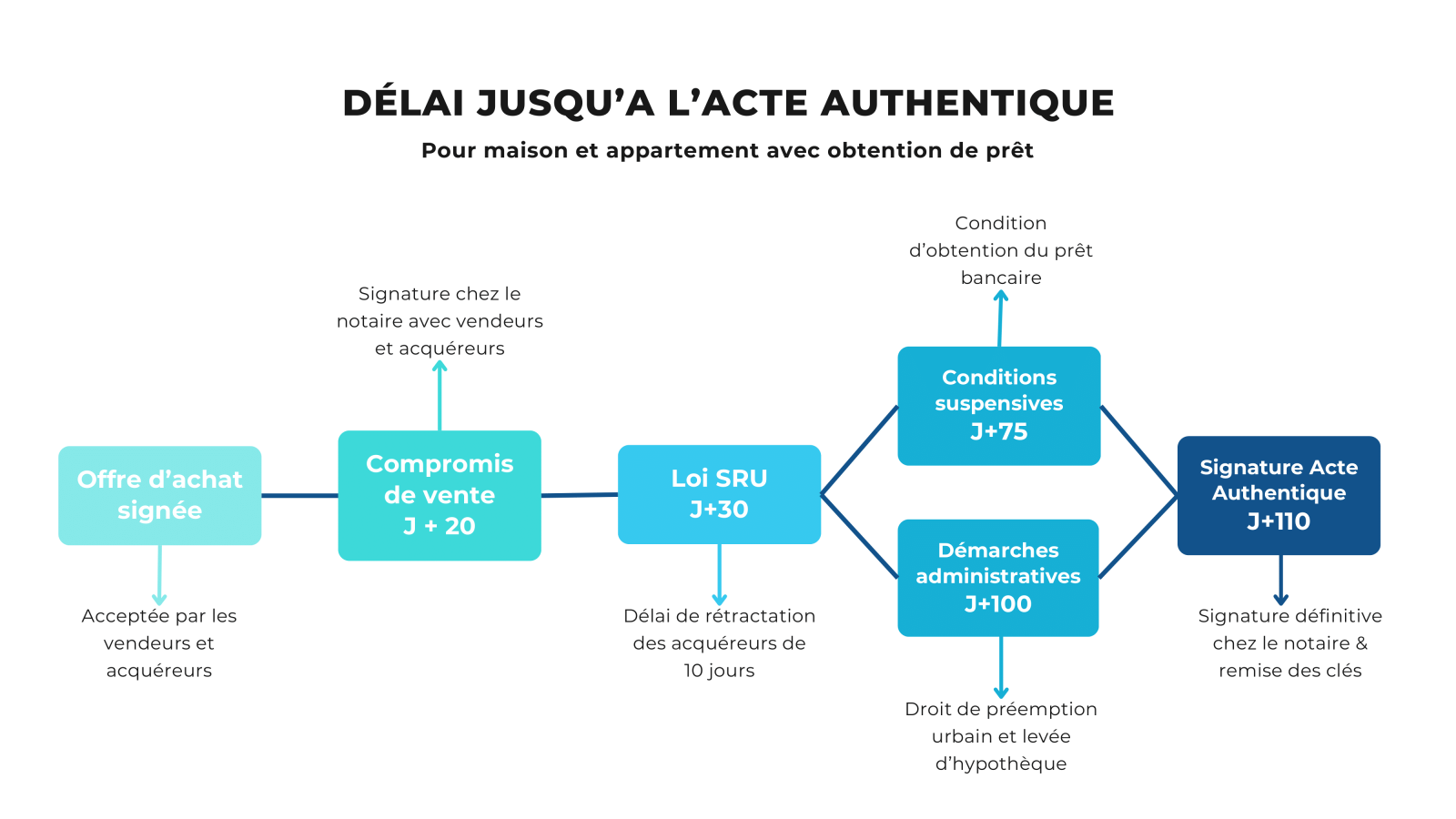
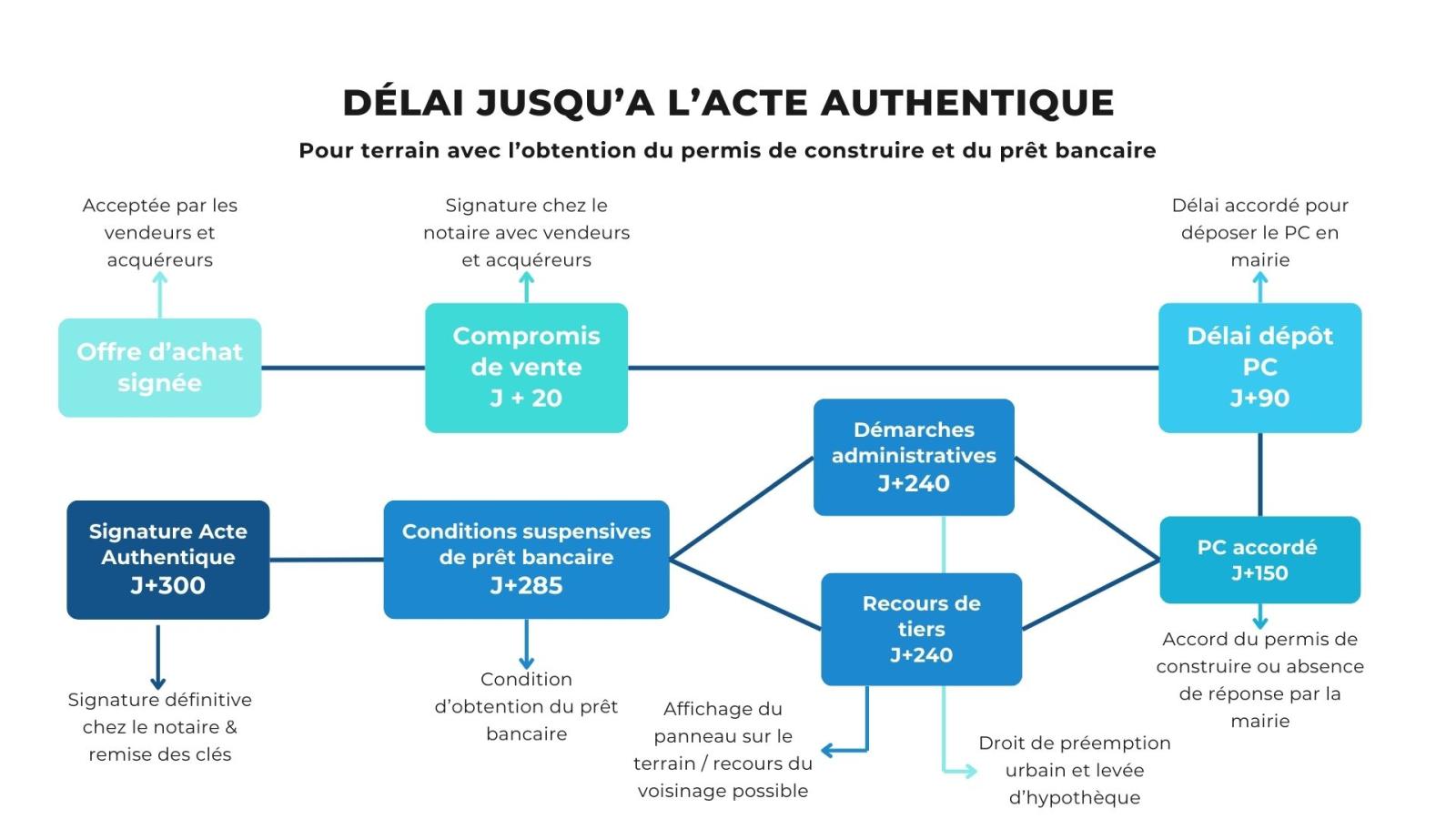
These timelines are indicative: the actual timescales depend on the file, the financing and the approvals needed.
Payment and handing over the keys
At signing, the buyer pays the sale price and the notary fees, through the notary. The sale is then complete and the keys are handed to the buyer.
To prepare your file: the documents to gather to sell.
Selling a property takes organisation, and the support of an agency helps meet the deadlines and legal obligations. From the valuation of the property to the signing of the deed of sale, the agency supports you at every step.
Frequently asked questions
How long does it take between the preliminary contract and the deed of sale?
It is customary to allow three months, according to a notary’s office. The period can be shorter if the file is complete and the parties agree, and longer (six months or more) for building land with a construction project. The date in the preliminary contract is a deadline.
Can the seller withdraw after the preliminary contract?
No: the 10-calendar-day cooling-off period protects the non-professional buyer of a home, not the seller. A seller bound by a preliminary contract cannot freely give up the sale.
What happens to the deposit if the buyer withdraws?
It is refunded to them in full, within 21 days from the day after the withdrawal, through the notary.
What is the buyer’s cooling-off period?
10 calendar days, starting from the day after the first presentation of the registered letter notifying them of the preliminary contract. It does not apply to the purchase of building land.
Can the town hall buy the property instead of me?
Yes, if the property is in an urban pre-emption area. It has 2 months from receipt of the declaration of intention to sell. Its silence amounts to a waiver.
Sources
- Service-Public: promise of sale of an existing home (page checked 10 April 2026, in French)
- Service-Public: building permit (page checked 13 February 2026, in French)
- Notaires de France: sale formalities, declaration of intention to sell and urban pre-emption right
- Notaires: how to exercise the right of withdrawal after a preliminary contract (23 June 2025, in French)
- Notary’s office Franck Julien: time between the preliminary contract and the deed of sale (in French)
- ANIL: no right of withdrawal for the buyer of building land (Court of Cassation, 4 February 2016, in French)
Conclusion
From purchase offer to deed of sale, a sale moves at the pace of fixed timescales: the buyer's 10-calendar-day cooling-off period, conditions precedent (loan, building permit), a possible pre-emption right, then signing at the notary's office, generally about three months after the preliminary contract. Planning for them avoids unpleasant surprises.
Before setting a price or launching the sale, have your property valued: the valuation is free and without obligation, and the agency supports you through to the deed.
Free valuation
Free, no-obligation valuation, then support right through to the final sale deed (acte authentique).